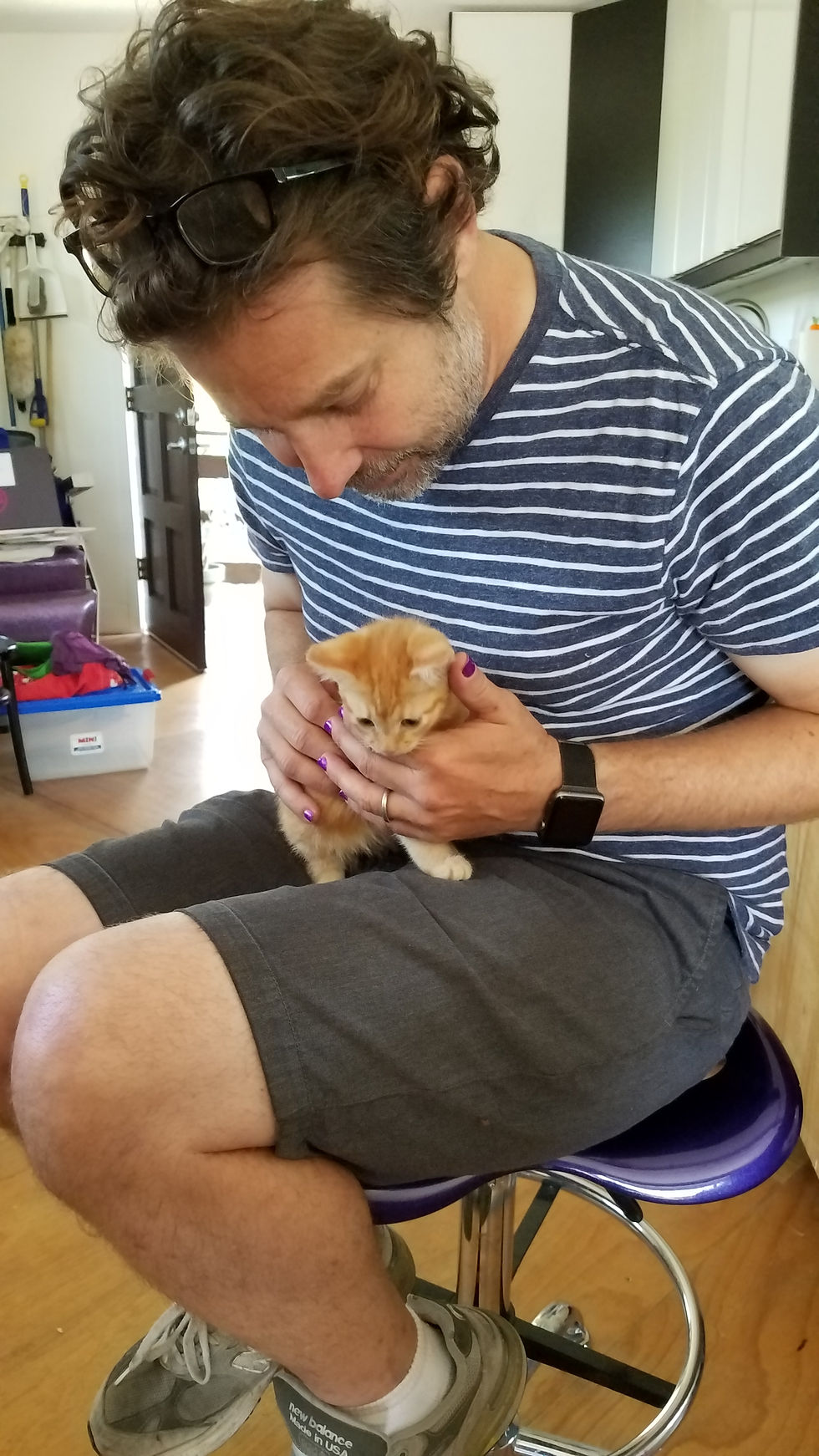
Scott Froschauer
By Kristine Schomaker I learned yesterday that my friend Scott Froschauer died suddenly. I've known him for almost ten years, and I'm still trying to find a place to put this.

Scott was a Shoebox artist, one of the early ones. We worked together on several projects, but the one I keep coming back to is an art salon we put together on consent, negotiation, and the male gaze, how the male posture of viewing women frames any sign of femininity as an invitation, and what it would mean to actually look at that system together, out loud, in a room. Scott wanted to make work about it, and before he did, he wanted to understand it from more than his own perspective. So we invited people in. The invitation said it plainly: we were putting this together communally, for all of us to understand it better, with Scott also looking to inform an upcoming exhibition and find collaborators. That was Scott. He had opinions, real ones, strongly held. But he never stopped wanting to learn. He wanted to listen more than he wanted to be right.
A week before he died, I emailed him a proposal. A couple of days later, I had to tell him it wasn't going to work out. His reply was two words. All good. That's it. No ego, no need to make it about himself. Just ease, right up until the end. That tells you everything about who he was.
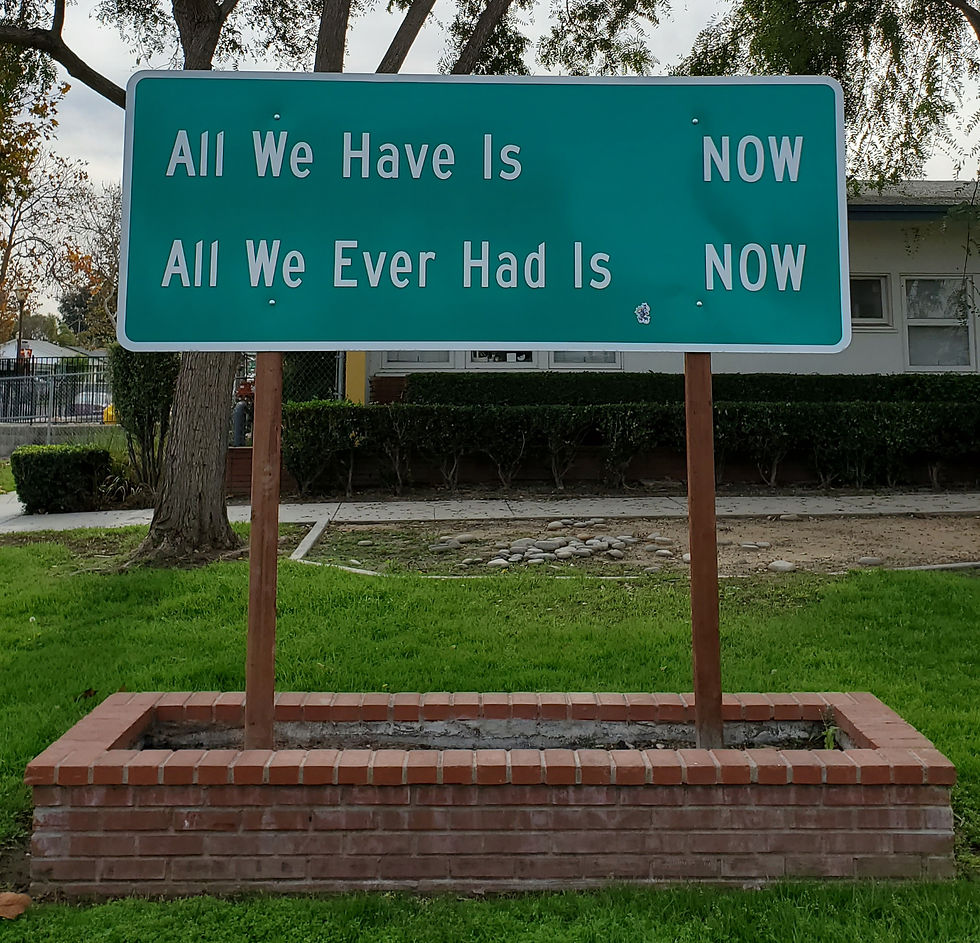
Scott's art was about language and public space and the idea that a simple phrase, placed in the right context, could shift how someone moved through their day. He made signs. Not directions or warnings but invitations. You Are Magic. Word Hunger. If There Is To Be Peace In The Nations There Must Be Peace In The Cities. He put them out in the world where people actually were, on streets and in galleries and anywhere someone might stop for a second and feel something they weren't expecting to feel. He wanted art to reach people who weren't looking for art. He believed it could.
He wrote once that each phrase or object held a huge pile of meaning for him, but that his goal was to erase his own meaning once the piece was made, so there was room for someone else's. He wanted people to connect to the work on their own terms, not his. That kind of generosity is rare. That kind of ego-erasure is even rarer.

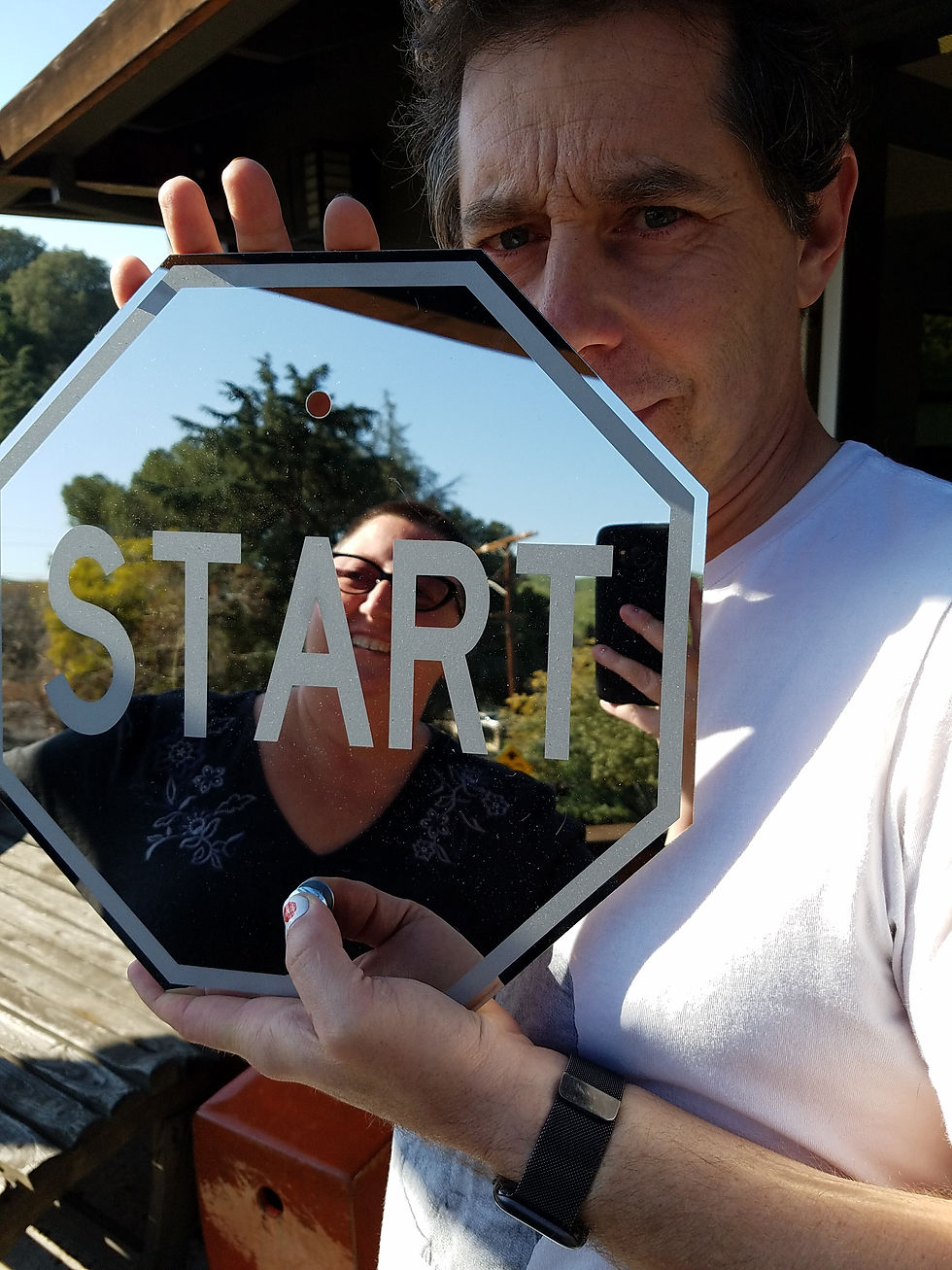
He wrote that seeing himself had been the biggest challenge of his life. That gaining a real view of himself was at the center of unpacking everything he'd absorbed without choosing it, the preconceptions, the culturally programmed ideas that had quietly shaped his choices for years. He wrote that witnessing the identities he'd built and clung to for validation changed his entire world. My work is a mirror. My actions are a mirror. It's all a reflection, if I take the time to look. That's not a small thing to arrive at, and it's not a small thing to say out loud.
I had invited Scott to collaborate on Perceive Me, my ongoing project about self-perception, body image, and being seen. He came back with this idea. He proposed recreating Manet's Olympia as an echo enigma print, mounted so viewers would see themselves reflected back through a one-way mirror behind it. He wanted the piece to perceive the viewer, instead of the other way around. He said the full power of a piece is the perceiver's ability to be perceived back, that we reconsider our own perceptions the moment we know we're being watched too. Even describing it, he joked about reining in his own urge to over-explain the whole mechanism in wall text. He didn't need to. The work spoke. That was such a Scott idea. Generous, conceptually sharp, and completely in service of the experience rather than himself.
He was following his dreams right up until the end. Doing the work he believed in, living the way he believed in, making things that made the world actually better. Not aspirationally. Actually. People stopped on sidewalks because of his signs. They photographed them and sent them to friends who needed to hear exactly that thing at exactly that moment. He cared about that. He cared about people in a way that showed up in everything he made and everything he said.
He was full of joy. Full of life. He brought encouragement and forward motion into a room just by being in it. He believed people could become kinder, clearer versions of themselves, and he spent his talent trying to help that happen, through his art, through his words, in galleries and out on the street, wherever people were willing to stop and actually look. Keep moving, he told me once. He meant it as encouragement, and now it reads like something closer to instruction.

I've been thinking about how many people are grieving him right now. Friends, family, collaborators, strangers who only knew his work. The reach of a person who truly cared and truly showed up is enormous and often invisible until something like this happens and suddenly you see it all at once.
I valued our conversations more than I probably ever told him. I valued that he was always looking, at himself, at the people around him, at whatever he thought he knew, willing to turn it over again if it meant seeing more clearly.
I don't have a clean way to end this. I just know the world is missing something it needed, and I'm grateful for almost ten years of knowing him.